
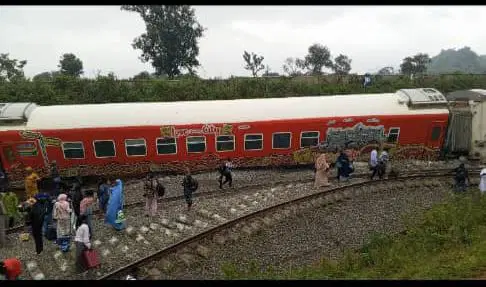
The NSIB’s preliminary findings point to a defective track switch, patched sleepers, broken securing clips, and lapses in maintenance and staff training as key factors in the Abuja–Kaduna train derailment at Asham Station.
The Nigerian Safety Investigation Bureau (NSIB) has revealed that the Abuja–Kaduna train derailment on August 26 at Asham Station “was triggered by defective infrastructure and lapses in safety management by the Nigerian Railway Corporation (NRC).”
Investigators found that the incident occurred shortly after the train passed a manually operated switch point previously declared unserviceable. Some track sleepers damaged in a prior derailment had only been patched, not replaced, and the point clip securing the switch was broken at the time.
The report further states that NRC personnel “had only received initial training without formal refresher courses,” while critical equipment like CCTV cameras, communication devices, and clocks remained defective.
Although 21 passengers were injured, no lives were lost among the 618 on board. The NSIB has issued safety recommendations urging the NRC to replace compromised sleepers, install OEM-standard point switches, restore monitoring equipment, and implement regular refresher training.