 Rifnote
Loading your desk
Rifnote
Loading your desk


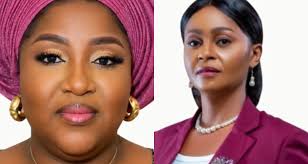
The two women running against Tinubu, Atiku, and Obi: Can they win?
As President Bola Tinubu, former Vice-President Atiku Abubakar, and former Anambra State Governor Peter Obi prepare for the 2027 presidential contest, two women are also seeking to become Nigeria’s next president, according to a report by Vanguard.
Ada Elizabeth Fredrick Okwori of the National Democratic Party (NDP) and Nkem Esther Okereke of the National Rescue Movement (NRM) are the only female presidential candidates among 18 candidates on the Independent National Electoral Commission’s final list for the January 16, 2027 election, published September 12.
Okwori, 48, from Benue State, founded the NDP and emerged as its candidate by consensus. She is running with Uchenna Anthony Chukwuemeka, 48, and has proposed 40% female representation in party structures and 15% of the national budget for education.
Okereke, 43, a former Nollywood actress, won the NRM ticket at its Abuja convention on May 29. Her running mate is 35-year-old Nasir Muhammed Sulaiman, and her “ESTHER Agenda” focuses on education, security, technology, housing and entrepreneurship.
Four other women feature as running mates, bringing the total number of women on the 18 tickets to six, against 14 male vice-presidential candidates.
Can they win?
Realistically, neither candidate is positioned to win. The major parties historically dominate Nigeria’s presidential race—the APC, PDP, the Labour Party since 2023, and more recently Peter Obi’s Nigeria Democratic Congress (NDC), as well as Atiku Abubakar’s African Democratic Congress (ADC)—which command far greater funding, structural reach, and name recognition across the country’s 36 states. The NDP and NRM lack comparable grassroots networks, state-level structures, or financial war chests needed to mobilize Nigeria’s large and geographically dispersed electorate. Historically, minor-party candidates have polled in the low single digits nationally. Their candidacies are, however, significant for visibility—both symbolically, in a field long dominated by men, and substantively, in shaping debate around issues like education funding and women’s political representation.