 Rifnote
Loading your desk


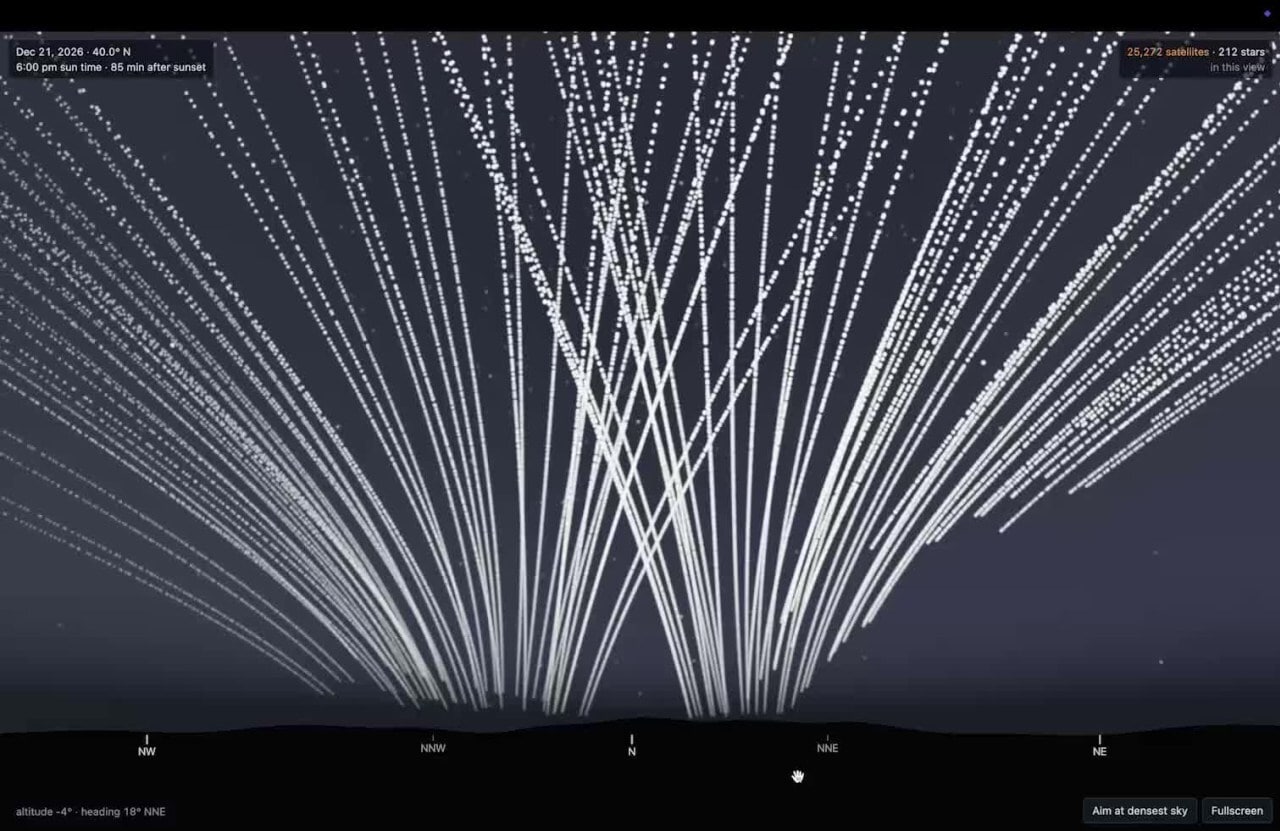
Could orbital data centers ruin the night sky?
On the top of a mountain in the Chilean desert, an $800 million U.S.-taxpayer-funded telescope just opened its eye.The brand-new Vera C. Rubin Observatory is supposed to complete a groundbreaking “survey” of the universe, the most comprehensive catalog of its galaxies, asteroids, supernovas and black holes ever completed. But Rubin’s scientists have encountered a problem. Fast-moving, light-reflecting satellites are leaving white streaks across their photographs.
The proliferation of satellites is an “existential threat” to the observatory’s work, said J. Anthony Tyson, its chief scientist, who is best known for mapping dark matter.
Tyson and other scientists warn that these orbiting machines will make it increasingly difficult to do astronomical research from Earth—and, eventually, will render the night sky unrecognizable.
Currently, there are more than 17,000 active satellites in orbit, compared with around 1,000 a decade ago, said Jonathan McDowell, an astrophysicist who has cataloged every orbital rocket launch since 1957. A decade from now, he estimates, there will probably be over 100,000.
POPULAR
- Midterms: Democrats secure biggest House majority in 34 years, Trump kicks
- “I am a better candidate than Peter Obi” – Seyi Makinde
- Thomas Markle’s alleged Asia “girls trips” were family “open secret,” relative claims
- Trump renews call for Nvidia to reinstate Huang despite board’s refusal
- ‘He grabbed my boobs’: Foreign tourist accuses 92-year-old Emir of Daura of sexual assault(VIDEO)