 Rifnote
Loading your desk
Rifnote
Loading your desk


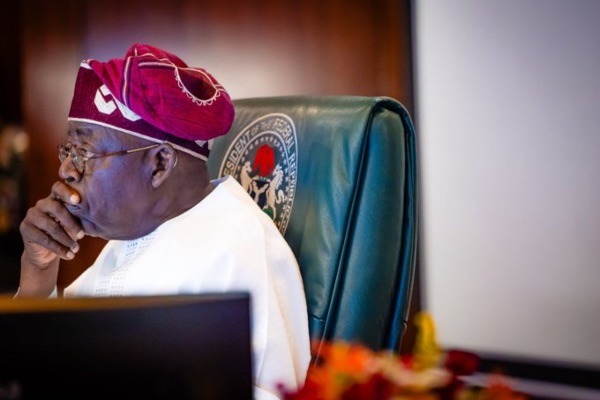
Court documents, FOIA battles, and a president’s past: everything you need to know about the Tinubu drug records case
‘And no later’: The three words from a US federal judge that have Nigeria watching its president’s past
A US federal court case that has been quietly working its way through the Washington DC legal system for more than three years exploded into Nigeria’s national consciousness this week — and the August 28 deadline set by a federal judge may determine whether decades-old American law enforcement records about Nigeria’s sitting president become public before next year’s election.
The case, Aaron Greenspan v. Executive Office for U.S. Attorneys, et al., Civil Action No. 23-1816, centres on a series of Freedom of Information Act requests filed by American transparency activist and PlainSite founder Aaron Greenspan between 2022 and 2023. Greenspan sought records from the FBI, DEA, IRS, CIA, Department of State and US Attorneys’ Offices in Illinois and Indiana relating to a 1990s Chicago heroin trafficking and money laundering investigation allegedly linked to four individuals — including President Bola Tinubu, according to Sahara Reporters and Tribune Online.
The Court Documents — What They Say
In a four-page motion filed on August 20, 2026, before US District Judge Beryl Howell, the FBI asked the court for permission to submit declarations ex parte and in camera — meaning privately to the judge alone, outside the presence of all other parties and outside the public court record. The FBI’s stated reason: a full public explanation of why it is withholding certain records could expose sensitive law-enforcement techniques and potentially endanger individuals whose identities are connected to the investigation.
One FOIA request, identified as Request Number 1588244-000, explicitly sought “the entire FBI file for Bola Ahmed Tinubu, DOB 3/29/1952, President-Elect of Nigeria as of February 2023.”
Washington DC lobbying firm Von Batten-Montague-York, L.C. — which public filings show was retained by former Vice President Atiku Abubakar in March 2026 to “protect and strengthen his reputational standing” in the US — has been posting real-time updates on the case. The firm claimed the FBI has now admitted it holds “highly sensitive drug-trafficking-related information” about President Tinubu, and that seeking private review is standard procedure for protecting informants.
Judge Howell granted the FBI’s request for private review — but her order carried a sharp edge. She directed the FBI, the DEA, the US Department of Justice and President Tinubu’s legal team to file their final oppositions to the public release of the records by August 28, 2026, “and no later.” The “and no later” language was interpreted by legal observers and the Von Batten firm as a signal that the court has exhausted its patience with delays.
The Timeline of Legal Manoeuvres
The case has been a long exercise in institutional stonewalling. US agencies initially refused to confirm or deny whether they held any responsive records — a legal position known as a Glomar response. In April 2025, Judge Howell ruled that the FBI and DEA could not continue relying on the broad Glomar response in relation to the Tinubu records, directing the agencies to search for and process records that were not protected from disclosure under FOIA.
The agencies then requested a 90-day extension. When that expired, the FBI filed its August 20 motion seeking private review. In a twist that fuelled further questions, Tinubu’s legal team joined the US government’s request for an extension, asking that his response remain on the same timetable as the government.
Tinubu’s Legal Position
Tinubu has consistently denied wrongdoing and rejected allegations linking him to drug trafficking. His lawyers have maintained that the case was an in rem civil forfeiture proceeding, meaning the action was brought against the money rather than Tinubu personally. They have also argued that Tinubu was never arrested, indicted, arraigned or criminally convicted of a drug offence in the United States.
The 1993 civil forfeiture — in which $460,000 in funds connected to Tinubu were forfeited to the US government — has been the centrepiece of this controversy for years. Tinubu has described it as a civil settlement, not a criminal matter. The latest FBI filing does not itself establish that Tinubu committed a drug-trafficking offence. It concerns the agency’s request to privately provide the court with additional justification for withholding certain records under FOIA exemptions.
Nigerian Reactions on X
The story has set Nigerian X ablaze. Many users expressed a mixture of outrage, dark humour and resignation — with the hashtags #TinubuDrugRecords and #August28 trending through the week.
“The fact that Tinubu’s lawyers are in a US court fighting to stop the release of his own records tells you everything,” wrote one verified user with over 100,000 followers. “Innocent people don’t fight this hard to hide their past.”
Others pointed to the political timing. “This is Atiku’s people doing this. Von Batten was hired by Atiku. The whole thing is a political operation ahead of 2027,” wrote another user, reflecting a widespread counter-narrative among Tinubu supporters who view the case as an opposition-sponsored reputational attack.
Nnamdi Kanu’s lawyer, who has been following the case closely, declared publicly that the records would ultimately be released — a statement that was shared thousands of times. Opposition figures cited the case as evidence of the character deficit they argue disqualifies Tinubu from a second term.
The Bigger Picture
As Nigeria heads into the 2027 presidential election, the matter of Tinubu’s alleged drug trafficking record has come to the front burner of public discourse. Whether the records, if released, contain anything beyond what is already publicly known — or whether they are ultimately withheld in full — the legal battle itself has already done political damage.
What is certain is that August 28 — today — is the day every party in the case must show their hand to Judge Howell. What the judge does next may shape not just a FOIA case, but Nigeria’s most consequential election in years.