 Rifnote
Loading your desk
Rifnote
Loading your desk


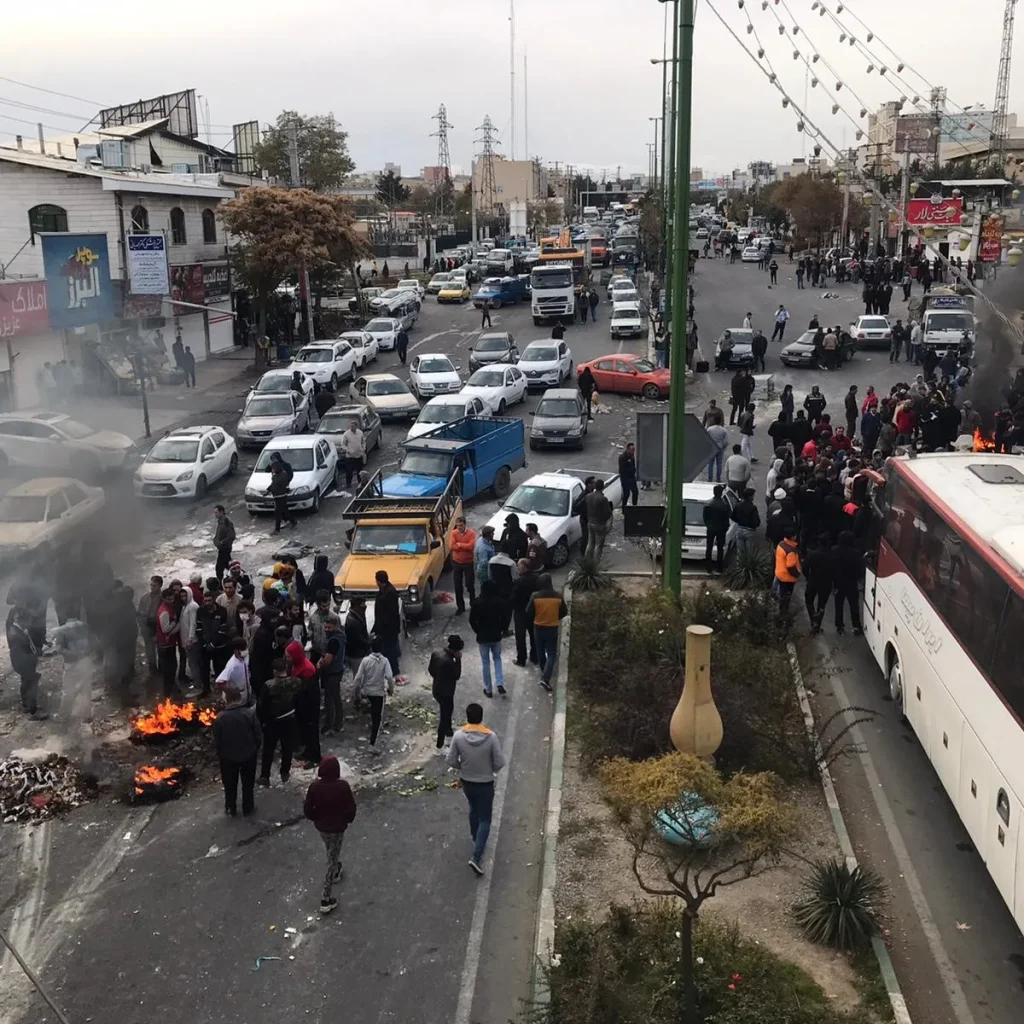
Iran braces for uprising: Tehran’s streets are being quietly rebuilt for crackdown
Not the opposition — Iran’s own former minister warns of imminent unrest and war
Tehran’s cobblestones are disappearing. In their place — asphalt. And for those watching Iran’s Islamic Republic closely, the change is anything but cosmetic.
As reported by Iran International, authorities are systematically converting historic pedestrian zones in central Tehran — including areas around the Grand Bazaar and near universities, long recognised as flashpoints of political mobilisation — into vehicle-accessible thoroughfares. Municipal officials have described the work as traffic management. Analysts and reporters on the ground say otherwise.
Iran International reporter Mehdi Sepahvand, who investigated the changes, put it plainly: “By changing these pedestrian zones into thoroughfares for cars, they are actually paving the way for swift action during protests.” The alterations, he said, create “plain sight and direct shooting range” for security forces — stripping away the bollards, benches, trees and restaurant furniture that protesters have historically used for cover or to impede advancing security motorcycles.
The urban modifications are only one piece of a broader and deeply deliberate picture.
Hardliners Return, Basij Repositioned
The clearest signal of the Islamic Republic’s internal anxieties may be the return of Hossein Taeb — one of the regime’s most feared security figures — to command the Basij, the paramilitary force that has historically served as the state’s frontline instrument of domestic repression.
Omid Memarian, a senior Iran analyst at the think tank DAWN, told Iran International’s Eye for Iran programme that the leadership understands “the domestic situation can explode at any moment.” Taeb’s return, Memarian argued, was not about reconciliation. It was a signal that authorities are prepared to “crush any dissent.”
The question of who is actually ordering these moves carries its own alarm. With Iran’s new Supreme Leader remaining absent from public view, strategic forecaster Kamran Bokhari of the Middle East Policy Council warned that a small group within the security establishment may be effectively running the system. He went further, describing the arrangement as an “undeclared coup” by the Revolutionary Guards — the IRGC consolidating authority while preserving the outward appearance of a functioning constitutional order.
A Former Minister Sounds the Alarm
What makes the current moment particularly striking is that the warning about imminent unrest is not coming from the opposition — it is coming from within the system itself.
Former Economy Minister Ehsan Khandoozi, who served under the late President Ebrahim Raisi, has publicly warned that “all the signs” point to “unrest and then war” during Shahrivar and Mehr — the Persian calendar months that roughly span late August through late October 2026. Khandoozi urged the government not to raise key prices, because regime insiders understand precisely how combustible conditions have become.
The economic backdrop explains the fear. With the dollar now trading at a historic 2 million rials, fuel shortages disrupting daily life, and international sanctions tightening by the week, the pressure on ordinary Iranians has become acute. Former CIA Iran specialist Mark Fowler told Iran International that survival has become the regime’s primary metric. “Surviving is winning for the Iranian regime right now,” he said — but survival, he cautioned, is not the same as stability.
The Next Threat May Come From Within
The Islamic Republic has, for now, absorbed severe military pressure from abroad without collapse. Its harder test, analysts increasingly believe, may not arrive from across its borders — but from its own streets.
Authorities are simultaneously pressuring the cafes, restaurants and informal gathering spaces where Iranians — including women appearing without mandatory hijab — have carved out small but meaningful pockets of social freedom. Those spaces, Sepahvand noted, allow communities to form. And communities, authorities understand, can translate into collective action.
The Islamic Republic is not merely reacting to unrest. It is engineering the terrain — physically, institutionally, and politically — to contain it before it begins.