 Rifnote
Loading your desk


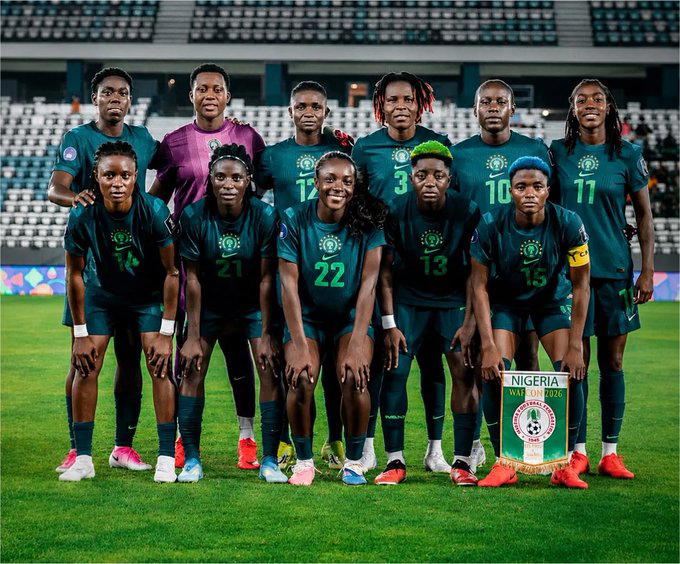
The most catastrophic night in the history of Nigerian women’s football: How Super Falcons collapsed at WAFCON 2026
Nigeria fails to qualify for the Women’s World Cup for the first time
It began with a shocking loss to debutants Malawi and ended with a goalkeeper’s boot on the goal line. In between, Nigeria’s Super Falcons dismantled 33 years of women’s football history in the space of two catastrophic weeks in Morocco.
The 2-1 playoff defeat to South Africa in Casablanca on Thursday confirmed the unthinkable — Nigeria will not be at the 2027 FIFA Women’s World Cup in Brazil. The Super Falcons, ten-time WAFCON champions and the only African nation to have qualified for every Women’s World Cup since the inaugural 1991 tournament in China, have been eliminated, according to BBC Sport.
The collapse did not happen on Thursday night. Its roots stretch back months, to a preparation programme that the Nigeria Football Federation allowed to become dangerously disjointed.
Nigeria had been expected to participate in a four-nation WAFU B tournament in Abidjan in February and March — a valuable block of competitive preparation. It was cancelled due to organisational and logistical problems. The NFF eventually arranged a double-header against Senegal in June, useful but insufficient. Then, with just days before WAFCON kicked off, Nigeria’s planned final warm-up friendly against Ghana on July 18 in Casablanca was cancelled due to what the federation described as “unforeseen circumstances.” By July 20, only 19 of the 25 invited players had arrived in Morocco. Two US-based players — Deborah Abiodun and Gift Monday — did not complete the squad until July 24 due to travel problems.
A team defending the African title and chasing World Cup qualification arrived at a major tournament fragmented, underprepared, and short of match sharpness. The consequences were immediate.
On July 28, Nigeria walked out against Malawi — WAFCON debutants — and lost 3-2. Temwa Chawinga and Tabitha Chawinga struck in the 69th and 74th minutes. Rasheedat Ajibade’s late penalty gave Nigeria brief hope, but Malawi scored again before the final whistle. It was the single most shocking result of the entire tournament.
Nigeria recovered to beat Zambia 1-0 and thrash Egypt 6-2, scraping through the group stage. But in the quarter-finals, Cameroon’s Myriam Wamen unleashed a stunning 19th-minute free-kick and Nigeria could not find a way through, losing 1-0. Their title defence was over. So, critically, was their automatic World Cup qualification. The four WAFCON semi-finalists earned direct spots in Brazil. Nigeria was not among them.
Thursday’s one-off playoff against South Africa in Casablanca represented Nigeria’s last lifeline — win and enter the inter-confederation World Cup qualifier. Lose and go home.
Coach Justin Madugu restored Asisat Oshoala, Francisca Ordega and Uchenna Kanu to a starting eleven that approached the game cautiously. Too cautiously. South Africa, meticulously drilled by coach Desiree Ellis, pressed high, cut off Nigeria’s passing lanes and looked the more dangerous side on the counter.
The first half ended goalless, but the warning signs were clear. Nigeria’s attacks were isolated, lacking the quick combinations and movement needed to unlock a well-organised South African defence. Oshoala, the six-time African Footballer of the Year, had moments but was never at her sharpest.
The decisive goals came in the second half. In the 56th minute, Ronnel Donnelly split Nigeria’s defence with an exquisite through ball to Hildah Magaia, whose low cross from the left found Thembi Kgatlana unmarked at the far post. Goalkeeper Chiamaka Nnadozie got a strong hand to the shot but could not keep it out — 1-0 South Africa.
Nigeria pushed for an equaliser. Kaylin Swart pulled off a stunning one-handed save to deny Uchenna Kanu’s header. But South Africa made it 2-0 in the 77th minute when Refiloe Jane’s shot deflected off Christy Ucheibe’s outstretched foot and rolled past a wrong-footed Nnadozie.
The closing stages were extraordinary. Jane was sent off after VAR spotted a deliberate handball on the goal line — and Ucheibe converted the resulting penalty in the 93rd minute to make it 2-1. Nigeria poured forward through seven minutes of added time. In the 97th minute, Michelle Alozie arrived at the far post with the goal gaping — only for Swart, who had earlier suffered a heavy collision and nearly been substituted, to throw out her left boot and smother the ball on the line. The referee blew the final whistle moments later. It was the save that ended an era.
The blame is wide and must be shared. Coach Justin Madugu becomes the first Super Falcons coach in history to miss a Women’s World Cup — a staggering personal and professional blow. His conservative approach against South Africa left Nigeria reactive rather than dominant. His attacking structure throughout the tournament lacked clarity, with too many attacks becoming individual actions rather than cohesive team moves. After a friendly win over Senegal in June, Madugu himself admitted there was “still a lot of work to be done.” That work was never completed.
But Madugu alone cannot carry this. The NFF’s chaotic preparation programme, cancelled fixtures, late player arrivals and logistical failures created the conditions for this disaster. A federation defending the African title owed its team far better.
For Oshoala, subbed off after a frustrating display at 31, Thursday night may have been her final WAFCON appearance. The questions about Nigeria’s next generation — and who leads the rebuild — now begin in earnest. This was not just a bad tournament. It was the end of an era that Nigeria’s football establishment failed to protect.
POPULAR
- Tinubu’s Makkah trip a ruse, actual destination is France—Atiku
- ₦100 food dispute claims one life, leaves several injured in Niger
- Ballon d’Or winner Vicky Lopez pays tribute to late Nigerian mom, Joy Felix
- Remember the Panama Papers? ‘Saint Peter’ says things he doesn’t practise — Onanuga mocks Obi
- N70k allowance: You can’t reject what you didn’t negotiate — NLC blasts TUC