 Rifnote
Loading your desk
Rifnote
Loading your desk


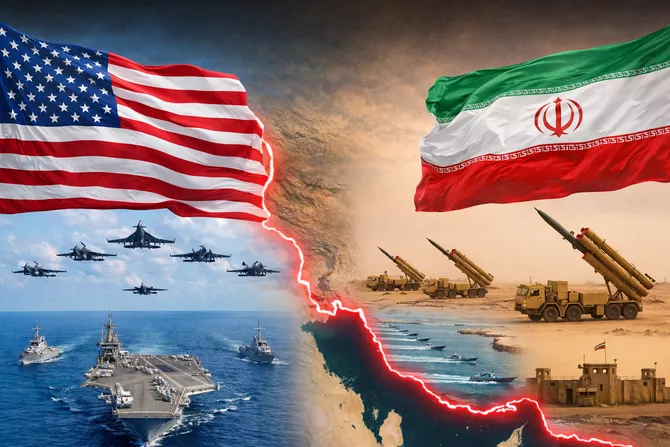
US-Iran war escalates as Tehran retaliates across Gulf after fresh US strikes
The US-Iran war has sharply escalated, with Washington launching a fresh wave of attacks on Iranian targets and Tehran retaliating against US-linked positions in several Middle Eastern countries.
According to Al Jazeera’s live coverage, the latest escalation began after the US military carried out a series of deadly attacks inside Iran. Iran’s Revolutionary Guard subsequently launched drone and missile strikes against targets in Gulf countries and Jordan.
The US Central Command said its latest strikes targeted facilities and military capabilities belonging to Iran’s Islamic Revolutionary Guard Corps, including air-defence systems, radar installations, maritime assets, mine-laying capabilities and communications facilities. Reuters reported that US officials also said two Iranian government-owned tankers were targeted during the operation.
The latest exchange represents the most serious direct confrontation between the two sides in weeks. Fighting had eased following an earlier period of reduced hostilities, but tensions returned over the weekend before intensifying with attacks involving Iranian and US-linked maritime activity around the strategically important Strait of Hormuz.
Iran has responded by targeting US assets in Jordan, Bahrain and Iraq, according to Reuters. The attacks have widened the conflict beyond Iranian territory and raised renewed concerns that countries hosting American military facilities could become increasingly involved in the war.
The human cost of the latest US strikes has also drawn attention. Al Jazeera reported that Iran’s Revolutionary Guard said four soldiers were killed in an attack in Kermanshah province, while at least five civilians were killed during a wedding ceremony near the southern Iranian city of Sirik.
Reuters, citing the Iranian Red Crescent, reported that five people were killed and at least 50 wounded in the incident. Iranian state-linked reports said a four-year-old child was among those killed, while another Iranian news agency put the number of wounded at 68.
The renewed fighting is also threatening global energy markets. The Strait of Hormuz, one of the world’s most important oil-shipping routes, has been severely disrupted during the conflict. Reuters reported that 17 million barrels of crude passed through the waterway on Monday, the highest daily volume since the war sharply reduced shipping activity.
The escalation comes as diplomatic efforts to end the conflict appear increasingly uncertain. US President Donald Trump said Tuesday that he was not seeking to force Iran into negotiations, signalling that Washington was prepared to continue its campaign despite the risks of further retaliation.
With Iran striking US-linked positions and Washington continuing attacks inside Iran, fears are mounting that the conflict could become a broader regional war. The involvement of Gulf states, Jordan and Iraq, combined with the continuing disruption around the Strait of Hormuz, has increased pressure on governments in the region to prevent the fighting from spreading further.
For now, there is no clear indication that either side is prepared to halt its military campaign, leaving the Middle East facing another potentially dangerous phase of the conflict.
POPULAR
- Phrank Shaibu asks Shettima: How did Tinubu graduate before government college Lagos existed
- Yamal, Kane, and Mbappé lead heated three-way race ahead of 2026 Ballon d’Or ceremony
- Fani-Kayode assumes diplomatic duties in South Africa, pledges stronger relations
- VIDEO: Nicki Minaj and Trump campaign in Michigan
- VIDEO: US pastor introduces second wife to congregation, declares monogamy unbiblical