 Rifnote
Loading your desk


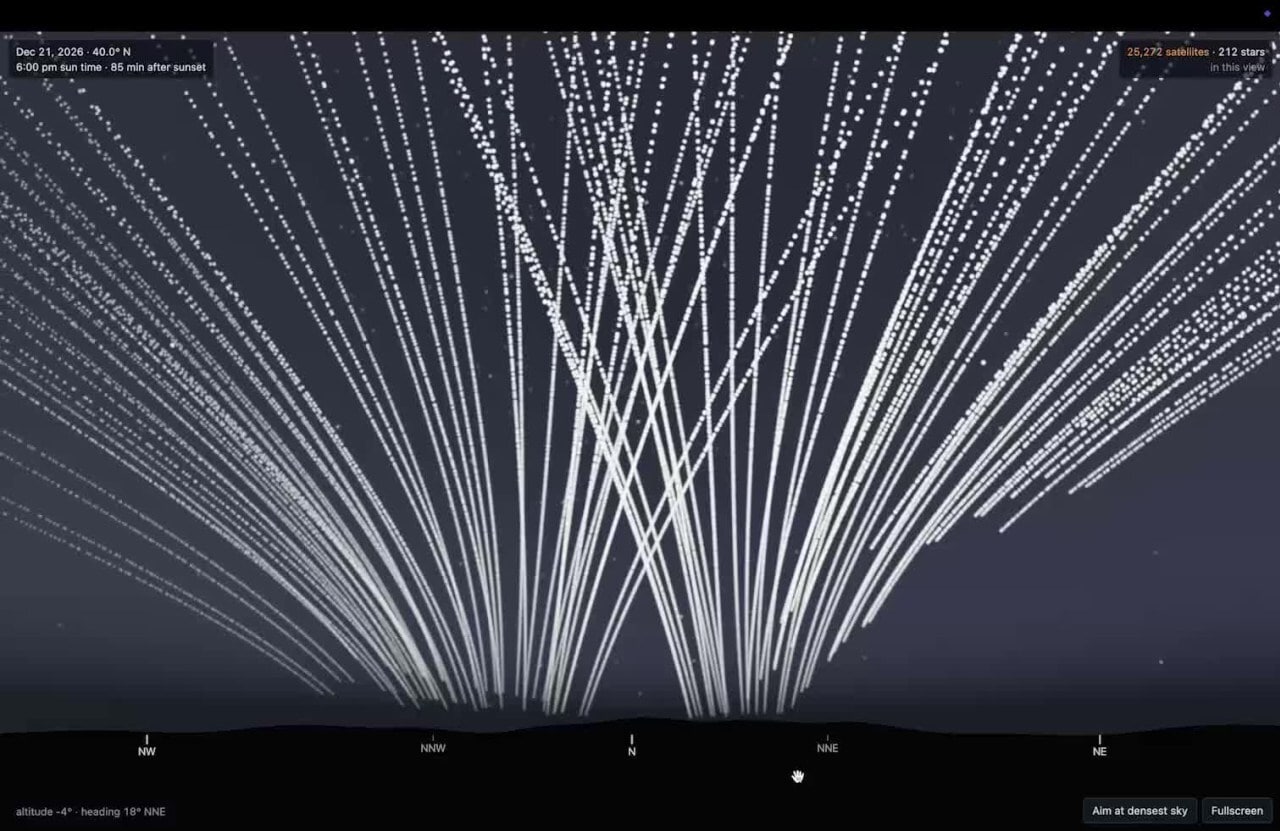
Could orbital data centers ruin the night sky?
On the top of a mountain in the Chilean desert, an $800 million U.S.-taxpayer-funded telescope just opened its eye.The brand-new Vera C. Rubin Observatory is supposed to complete a groundbreaking “survey” of the universe, the most comprehensive catalog of its galaxies, asteroids, supernovas and black holes ever completed. But Rubin’s scientists have encountered a problem. Fast-moving, light-reflecting satellites are leaving white streaks across their photographs.
The proliferation of satellites is an “existential threat” to the observatory’s work, said J. Anthony Tyson, its chief scientist, who is best known for mapping dark matter.
Tyson and other scientists warn that these orbiting machines will make it increasingly difficult to do astronomical research from Earth—and, eventually, will render the night sky unrecognizable.
Currently, there are more than 17,000 active satellites in orbit, compared with around 1,000 a decade ago, said Jonathan McDowell, an astrophysicist who has cataloged every orbital rocket launch since 1957. A decade from now, he estimates, there will probably be over 100,000.
POPULAR
- Mbappé row: China state broadcaster, CCTV still keeping La Liga off air
- Ex-LP Chairman Abure vows to mobilise supporters against Obi in 2027
- Tinubu asked me to tell you reforms have ended – First Lady tells Nigerians
- Stop attacking me, I know damaging things about Obi — Datti Baba-Ahmed warns Obidients
- 2027: God has granted my prayer to continue – Tinubu