 Rifnote
Loading your desk
Rifnote
Loading your desk


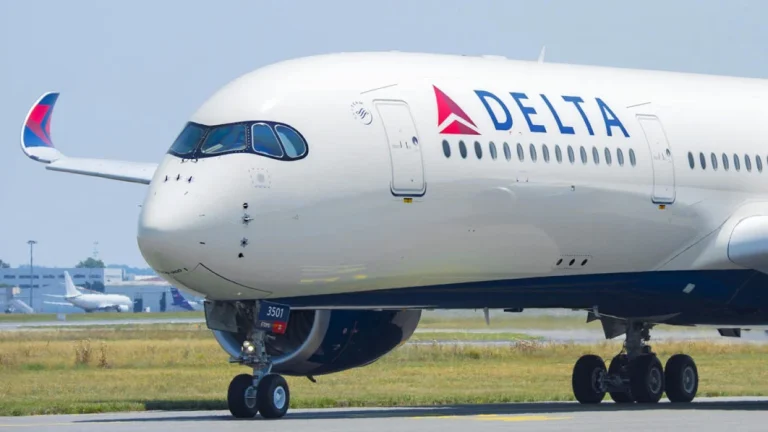
What went wrong at Delta? The real reasons behind two consecutive Lagos-Atlanta cancellations
Stranded in Lagos: Delta’s back-to-back flight cancellations leave hundreds without accommodation
Hundreds of passengers bound for Atlanta sat in the Lagos terminal hall for days this week, their travel plans in ruins — and the question everyone is asking is the same: why did Delta Air Lines cancel two consecutive flights on one of its longest and most important African routes with barely an explanation and no hotel rooms to show for it?
The answer, pieced together from airline communications, passenger accounts and statements from Delta’s Nigeria station manager, points to a cascade of operational failures that exposed a structural vulnerability in the Lagos-Atlanta route — and raised serious questions about the airline’s duty of care to its Nigerian passengers, according to ThisDay Live, The Punch and Vanguard.
What Actually Happened
The trouble began on Sunday, August 23, when Delta’s flight DL9895 — a 12-hour service from Murtala Muhammed International Airport in Lagos to Hartsfield-Jackson Atlanta International Airport — was cancelled after a mechanical fault was detected during pre-departure safety assessments. Passengers were told the aircraft would be inspected and the flight rescheduled.
Two days later, on August 25, those same passengers received a second notification they had hoped they would never see. “We are sorry. Your flight DL9895 from Lagos (LOS) – Atlanta (ATL) was cancelled due to an issue that limited crew availability,” Delta told affected travellers — a terse message that gave no timeline, no alternatives and no accommodation.
Delta’s Nigeria station manager, Salami Omeiza, offered a slightly different account to Vanguard, saying the August 25 flight actually “departed behind schedule as technicians resolved a maintenance issue with the aircraft.” The contradiction between the crew availability message sent to passengers and the maintenance explanation given to the press has deepened passenger frustration and raised questions about the transparency of Delta’s communications.
Why Is the Lagos-Atlanta Route So Vulnerable?
The Lagos-Atlanta route operates with limited daily frequency — unlike busier transatlantic corridors such as New York to London, where multiple flights operate daily and partner carriers can absorb displaced passengers quickly. When a widebody aircraft or crew issue arises on the Lagos route, there are far fewer backup options available, meaning that a single mechanical problem can rapidly cascade into a multi-day disruption, according to The Traveler.
Aviation analysts note that the Lagos route’s sensitivity to fleet availability and hub congestion at Atlanta — America’s busiest airport — means that weather-related ground stops, equipment changes or late-arriving aircraft can compound into overnight stays and missed connections with unusual speed. A shortage of spare widebody aircraft or available crew in Atlanta translates almost directly into cancelled services from Lagos, where there are no alternative Delta departures to fall back on.
The Human Cost
The practical consequences for stranded passengers have been severe. Travellers reported scrambling for emergency hotel accommodation at their own expense — despite airline regulations requiring carriers to provide hotel rooms, ground transfers and meals for passengers stranded overnight due to operational cancellations. Affected passengers cited disruptions to university resumption deadlines, urgent medical appointments and professional engagements — commitments that cannot simply be rescheduled.
Under applicable passenger protection rules, travellers affected by cancellations without seven days’ prior notice are generally entitled to re-routing on the next available flight, including through partner carriers, or a full cash refund. However, at the time of filing multiple reports, many affected passengers were still sitting in the Lagos terminal hall awaiting formal communications on confirmed seat allocations on alternative departures.
What Delta Said
Omeiza issued a statement saying: “Delta regrets the inconvenience this disruption has caused and appreciates the patience and understanding of our customers. The safety and well-being of our customers and crew remain our highest priority. We are providing affected customers with the necessary support and will share further updates as they become available.”
The statement — warm in tone but short on specifics — did not address the failure to provide hotel accommodation, did not confirm a timeline for rebooking or clarify the discrepancy between the crew availability and maintenance explanations given to different audiences.
This week’s disruption is not Delta’s first Lagos crisis. In May 2026, a Lagos-bound flight returned to Atlanta after eight hours in the air due to “operational issues,” after which the airline cancelled a subsequent Lagos-bound service — leaving passengers stranded on both sides of the Atlantic. The pattern raises a broader question that neither Delta nor Nigeria’s aviation regulator has yet answered: what structural safeguards exist to protect passengers on long-haul African routes when things go wrong?